
Whether your water heater has stopped working, isn’t producing enough hot water, or you’re thinking about replacing an older unit, having a couple of photos ready can help us diagnose the problem and prepare for your appointment.
At Lohmeyer Plumbing, one of the first questions we’ll ask is what type of water heater you have. If your first thought is, “I have no idea,” don’t worry, you’re not alone.
You’d be surprised how many homeowners aren’t sure whether they have a gas or electric water heater, let alone know the manufacturer, age, or capacity. That’s perfectly okay. You’re calling us because we’re the plumbing experts, not because you’re expected to be one.
As the saying goes, “A picture is worth a thousand words.” In many cases, a couple of clear photos tell us everything we need to know. Whether you need a repair or a replacement, they help us identify your water heater, determine if it’s still under warranty, and make sure we’re prepared before we arrive.
You can simply text the photos to our main office number or email them to us, whichever is most convenient for you. The more information we have before your appointment, the better prepared we can be with the right parts, the right equipment, and the right technicians.
Photo #1: The Entire Water Heater
Stand several feet back and take a picture that shows the entire water heater and the area around it. This photo is valuable because it helps us understand the installation before we ever arrive at your home. It allows us to see if there are any conditions that could affect the repair or replacement, such as:
- A water softener or other equipment installed in front of the water heater
- A tight utility closet or limited working space
- Nearby plumbing that may require additional planning
It also lets us see where the water heater is located. For example, if it’s in a basement or elevated on a stand in the garage, we’ll often schedule a second technician to help safely remove and install the water heater. Water heaters are heavy to begin with, and older units with years of mineral buildup can be even heavier.
The more of the surrounding area we can see, the better prepared we’ll be when we arrive.
Photo #2: The Manufacturer Label
Every water heater has a manufacturer label that contains important information about the unit. This label typically includes:
- Manufacturer
- Model number
- Serial number
- Capacity
- Fuel type
The serial number is especially helpful because it often allows us to determine the age of your water heater, even if you don’t know when it was installed.
Knowing the age helps us determine whether the unit may still be covered under the manufacturer’s warranty and can also help us decide whether a repair or replacement is likely to be the better option.
If you’re having trouble finding the label, here’s a few pictures that can help you spot it on your water heater.
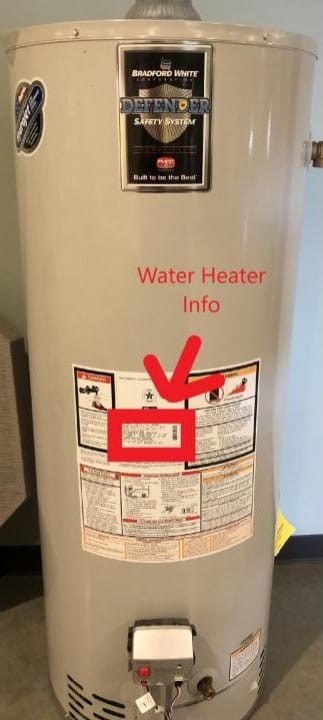
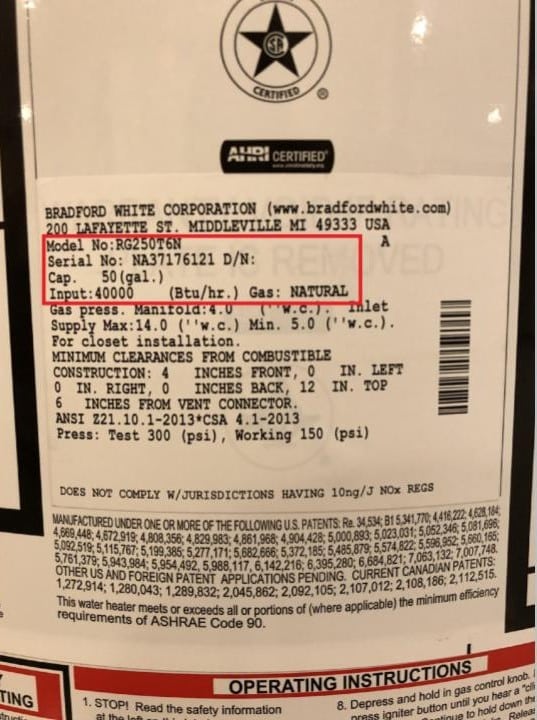
Common Types of Water Heaters
Even if you’re not sure what type of water heater you have, these examples may help.
Standard Vent Gas Water Heater
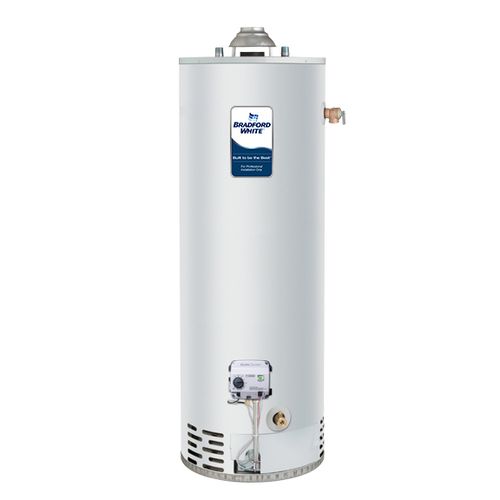
A standard vent water heater uses natural gas and vents exhaust gases through a metal vent pipe that extends upward through the roof.
Power Vent Water Heater
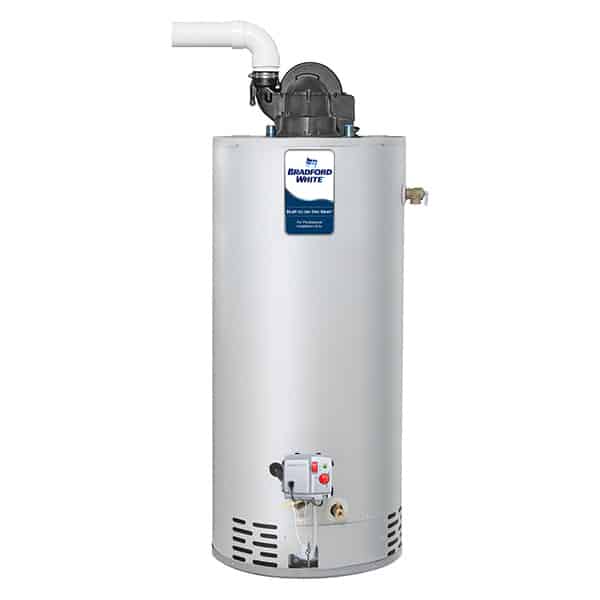
A power vent water heater also uses natural gas but uses a blower motor to push exhaust through PVC pipe that typically exits through the side of the home.
Electric Water Heater
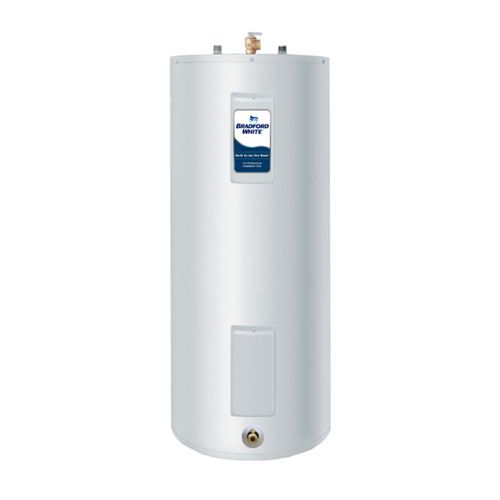
Electric water heaters don’t have a gas burner or vent pipe. Instead, they’re powered by electricity and typically have electrical wiring connected to the top of the unit.
If you’re still not sure which type you have, don’t worry. Between these photos and the manufacturer label, we can usually identify it for you.
Don’t Know? That’s Why We’re Here.
Not everyone knows whether they have a gas or electric water heater, how old it is, or even where to find the model number. That’s completely normal.
If you’re unsure, don’t let that stop you from calling. Send us a couple of photos, and we’ll do our best to identify everything we need. Whether you need a repair or you’re considering a replacement, our goal is to make the process as easy and stress-free as possible.
You don’t have to be a plumbing expert, that’s our job.